Mirror Mirror
A ticket campaign and a live audience game for a sitcom pilot about workplace harassment, built for a nonprofit with no real ad budget.
- Company
- Asian American Film Lab
- Year
- 2019
- Role
- Creative Strategy & Campaign Design
- Category
- Campaign / Live Activation
- Adobe Photoshop
- Adobe Illustrator
Context
Mirror/Mirror is a sitcom pilot created by Jennifer Betit Yen and produced by the Film Lab, a New York nonprofit that works on gender and ethnic diversity in film, television, and online media. The pilot uses comedy to deal with the gender bias women run into at work, and the sharper version of it that women of color run into.
It was programmed into the 2019 International Human Rights Art Festival, which ran December 9 to 15 at the Wild Project on the Lower East Side. The screening had one slot: Saturday, December 14 at 3pm, followed by a talkback with cast, crew, and people who work on gender bias for a living.
I came in on creative strategy, covering both the organization's own presence and this release.
Problem
There were three problems, and only one of them was the campaign.
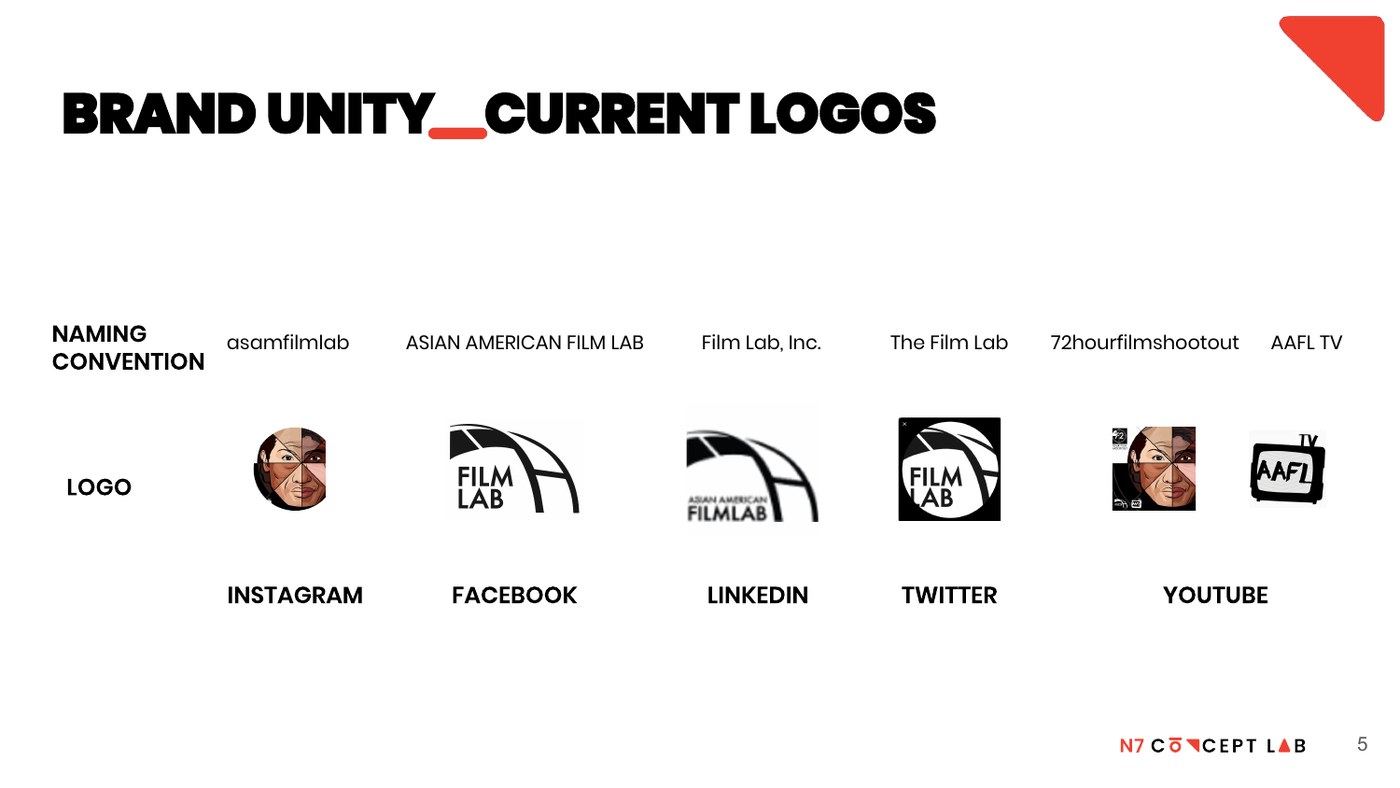
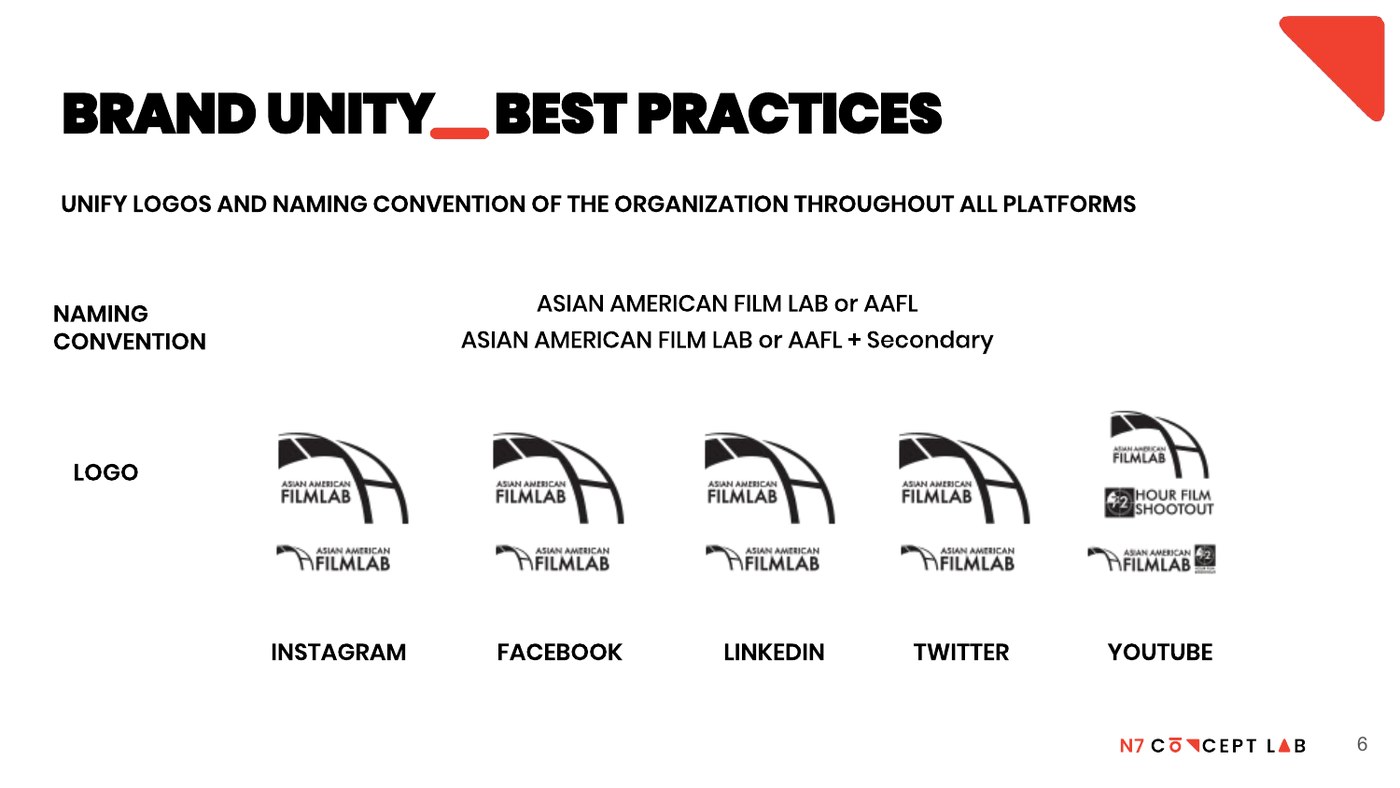
The first was that the Film Lab was hard to find. The organization was posting under six different names across its accounts: asamfilmlab on Instagram, ASIAN AMERICAN FILM LAB on Facebook, Film Lab, Inc. on LinkedIn, The Film Lab on Twitter, and both 72hourfilmshootout and AAFL TV on YouTube. Six names and six logo treatments for one nonprofit. Anyone who heard about the screening and went looking had to guess which account was real.
The second was the ticket path. A 3pm Saturday screening competes with everything else in a week-long festival, and there was no ad budget to speak of. Every poster, post, and email needed to end in the same place, and they did not.
The third was the room itself. A comedy about harassment has two ways to fail in front of a live audience. It can play as a joke, where people laugh and leave having felt nothing. Or it can freeze, where the subject sits close enough to people's actual jobs that nobody wants to react first. Neither one gives you a good panel, and the panel was half the event.
Solution
Start with the name problem, because it is the cheapest fix with the widest reach. Everything standardized on Asian American Film Lab, or AAFL, with one logo across every platform and secondary lockups only where a program genuinely needed one, so 72 Hour Shootout and AAFL TV read as parts of one organization instead of three separate outfits.
Then each channel got a job, instead of the same post going everywhere. Facebook carried announcements, the event invite, and the longer detail. Instagram carried the look: short, clean, on-tone images and stories. Twitter carried news from the Asian American and film worlds. LinkedIn carried the promotional cards. Posting ran twice a week, early to mid week, and event photos went up as a single album rather than a scatter of separate posts that shove everything else off the grid.
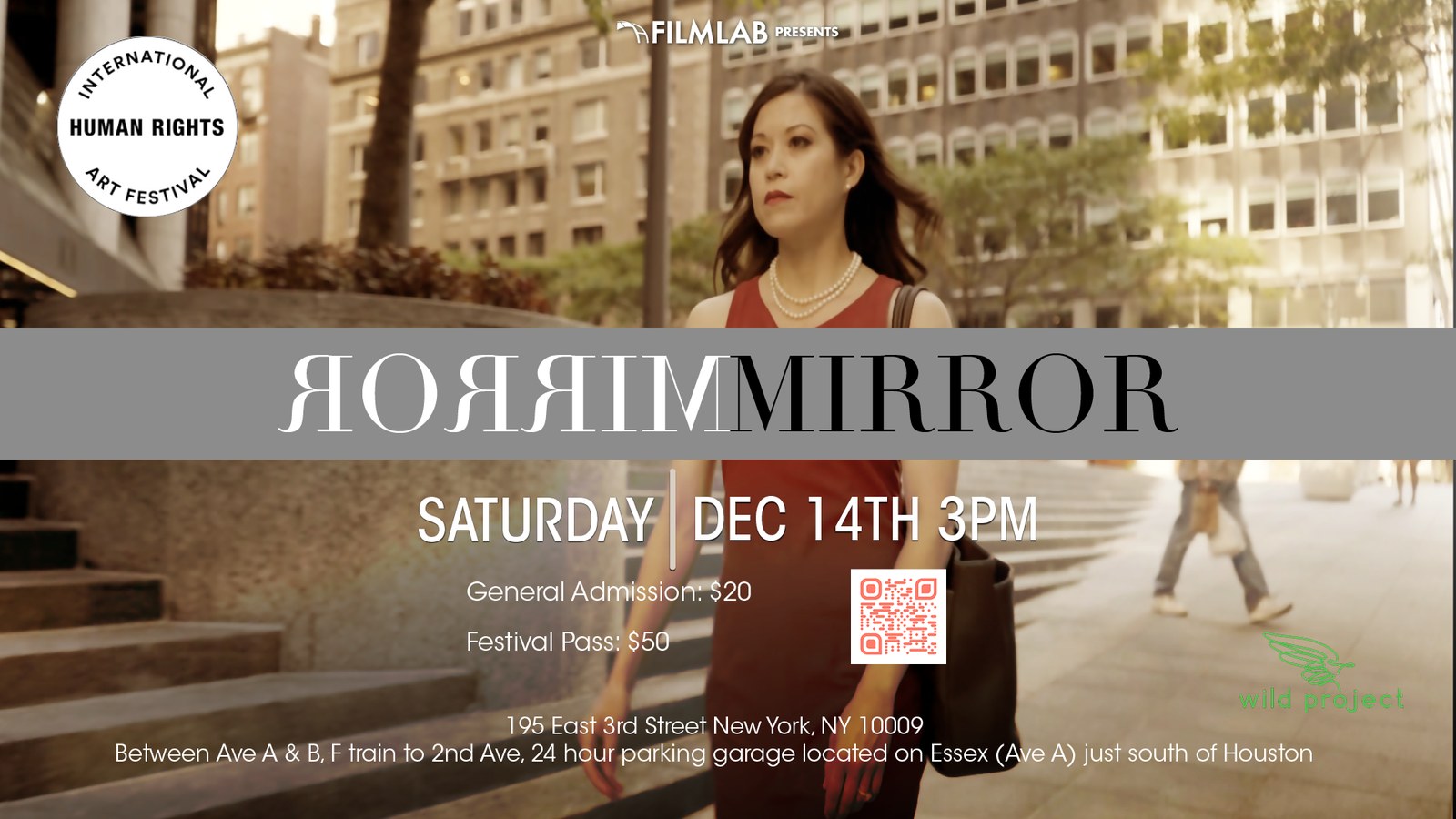
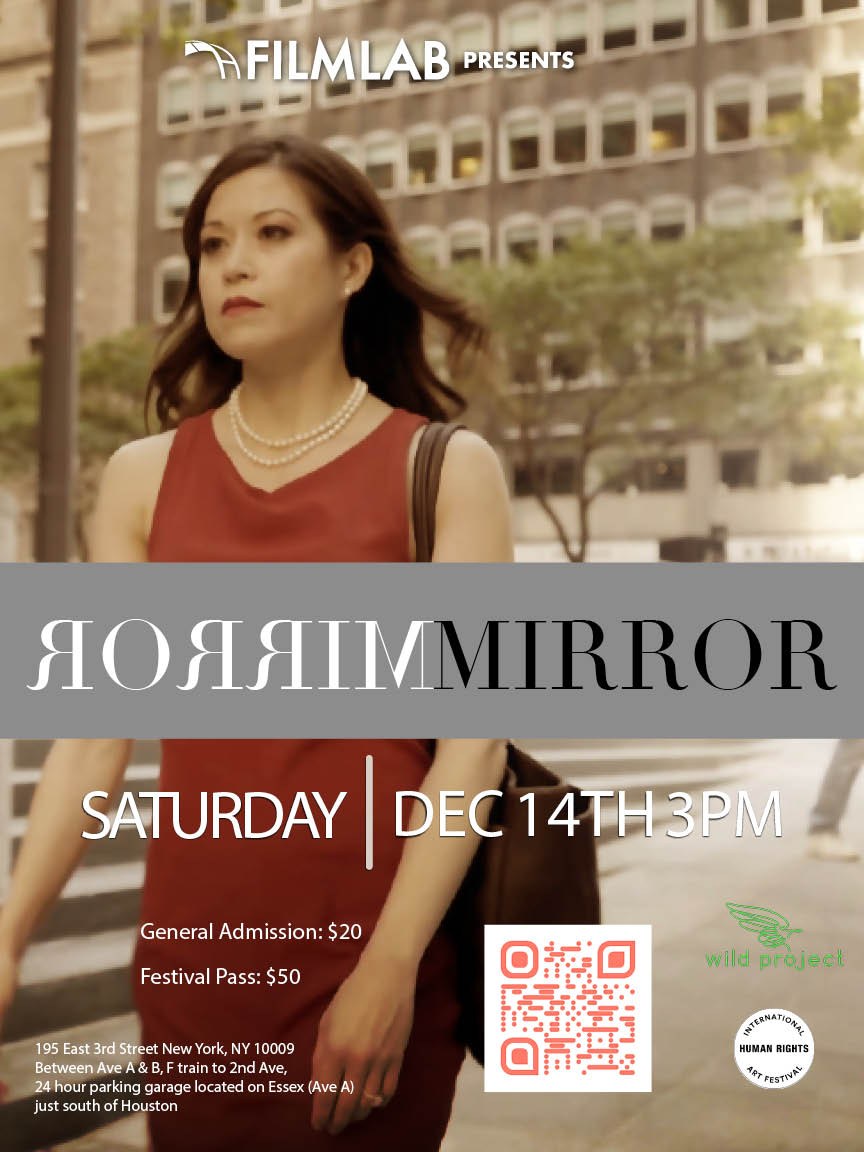
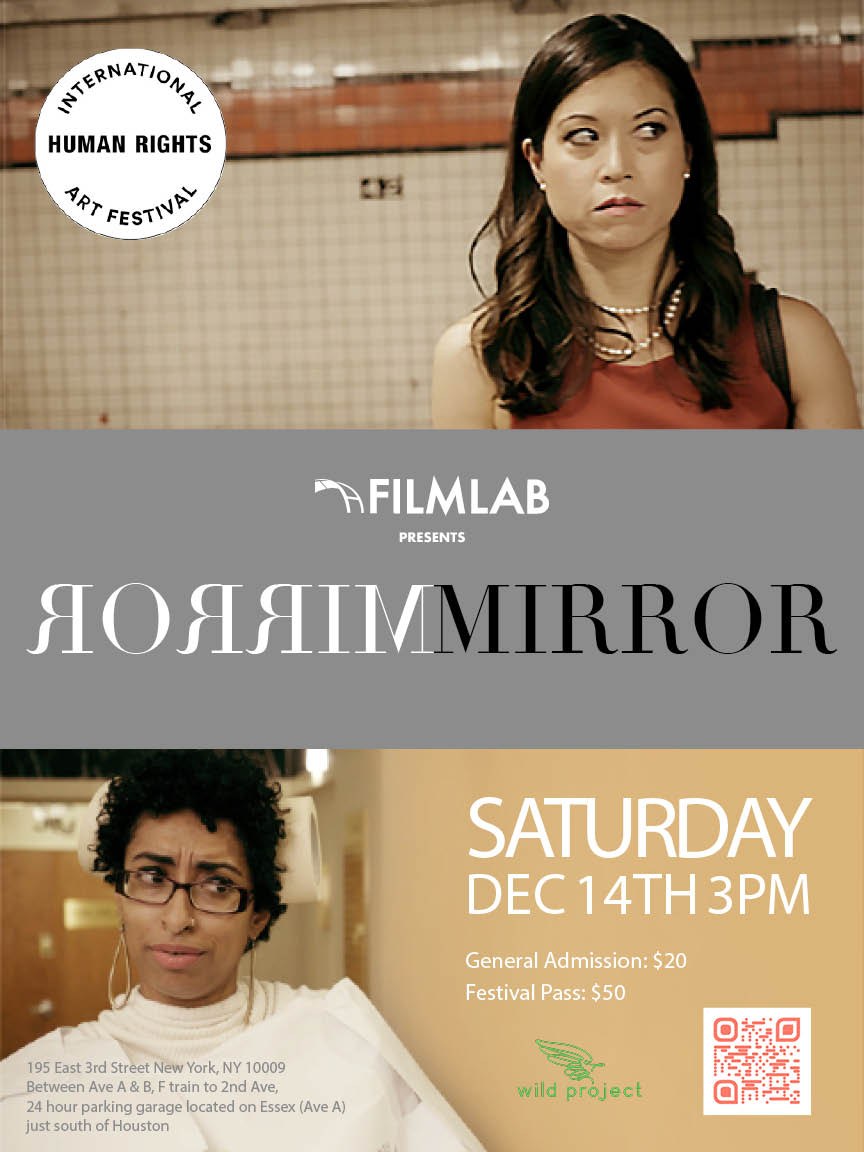
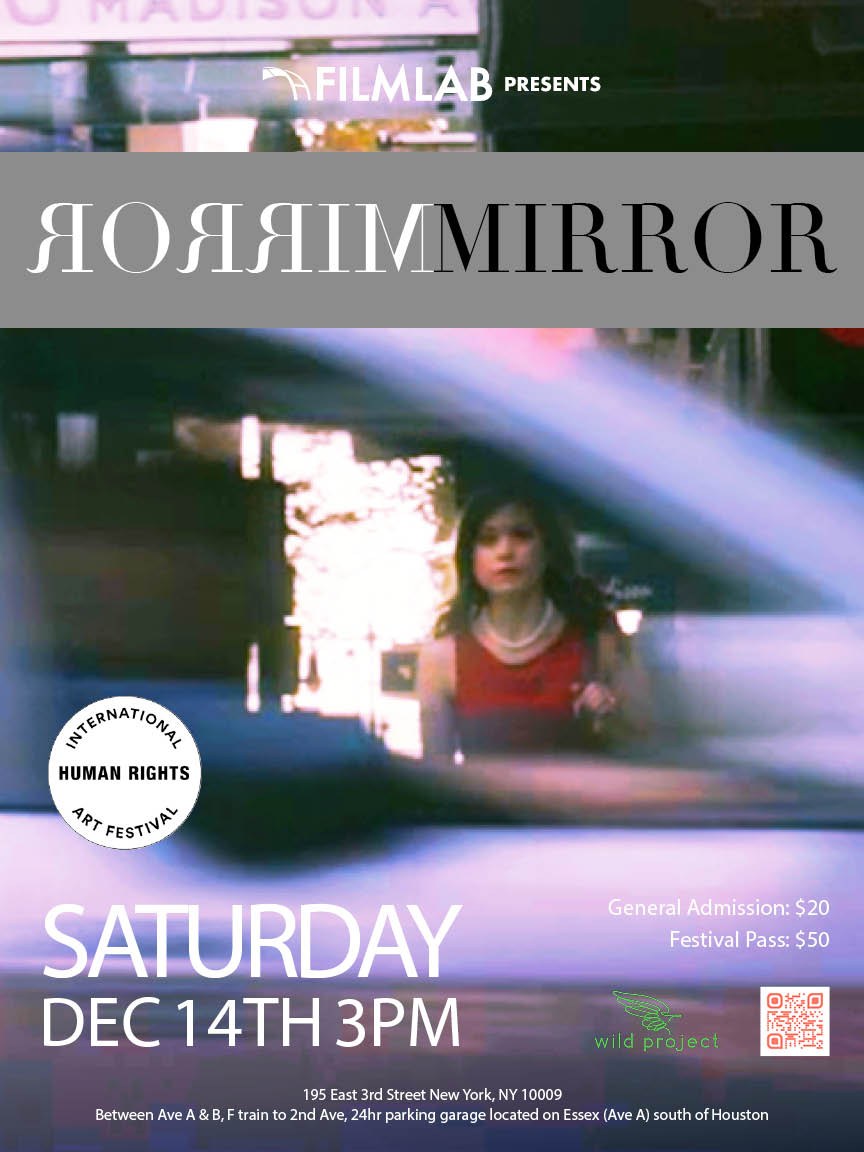
The poster system runs on one idea taken from the title. MIRROR is set twice, once reversed, so the wordmark is its own reflection. It sits in a gray band cutting across a still from the pilot. That band is also where every practical detail lives: date, time, both ticket prices, the venue and how to reach it, the Film Lab and festival marks, and a QR code.
Three variants came out of the same layout. The lead walking to work. Two women reacting to each other in an office. And a shot of her seen through glass, which is the concept doing its own job without help. A landscape cut carried the Facebook event.
The QR code is the piece that fixed the ticket problem. Everything pointed at one consolidated ticket link, so a poster on a wall and a post on a phone both landed in the same place.
Customer Journey
The run-up was built so people would arrive with an opinion, not just a ticket.
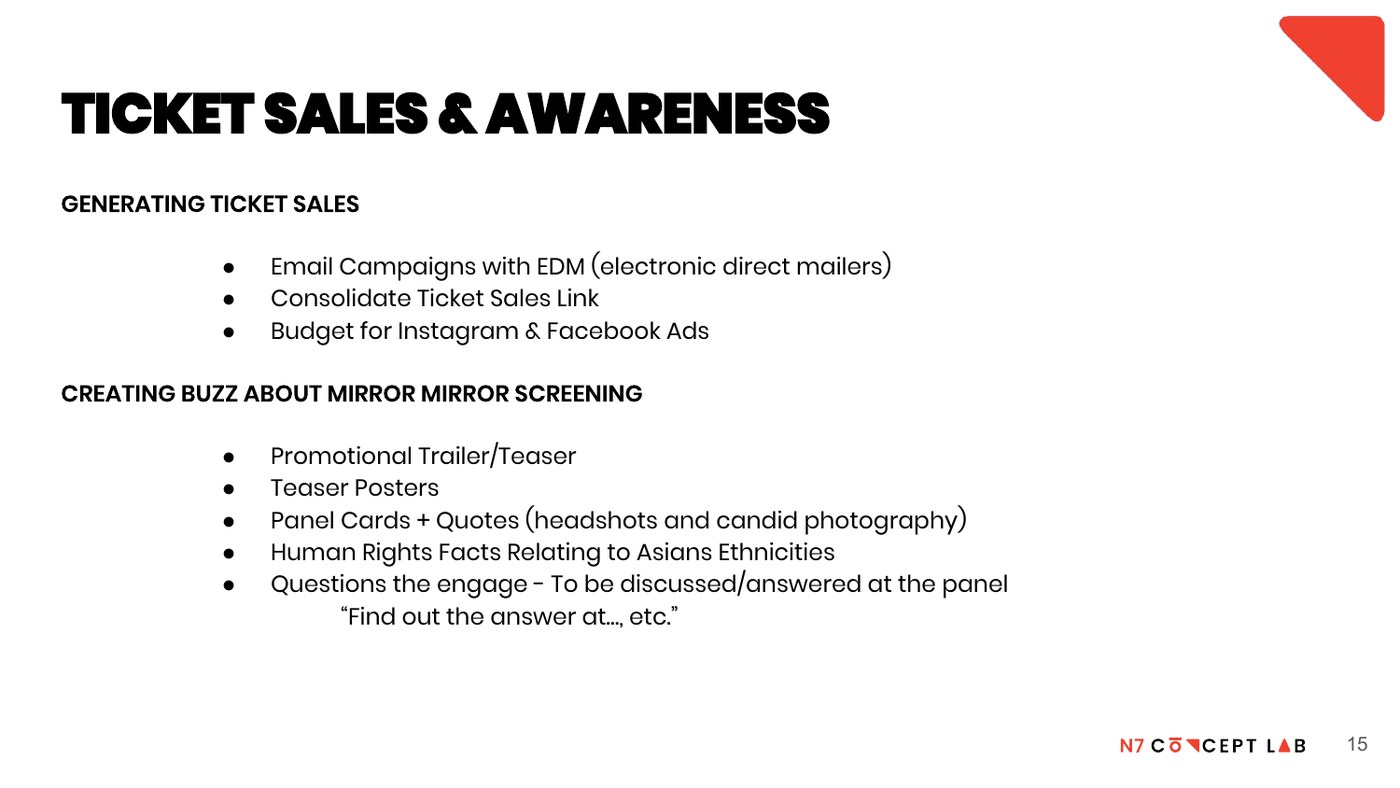
Teaser posters and the trailer set the tone. Panel cards introduced the people who would be on stage, using headshots and candid photography so the talkback read as a reason to come rather than something tacked on after the film. Human rights facts about Asian American communities ran alongside them.
The most useful format was a run of open questions posted with the answer deliberately withheld, the kind that can only end at the panel. Come and hear what people who deal with this professionally actually say.
Email did the direct work. Lists were segmented so the festival audience, the Film Lab's own following, and past 72 Hour Shootout participants each got a version that made sense for them, on templates built for a phone first. The festival and the Wild Project cross-posted, which is free reach and the most credible kind there is.
Impact
The screening ran on December 14 at 3pm at the Wild Project, followed by the talkback on gender bias after #MeToo.
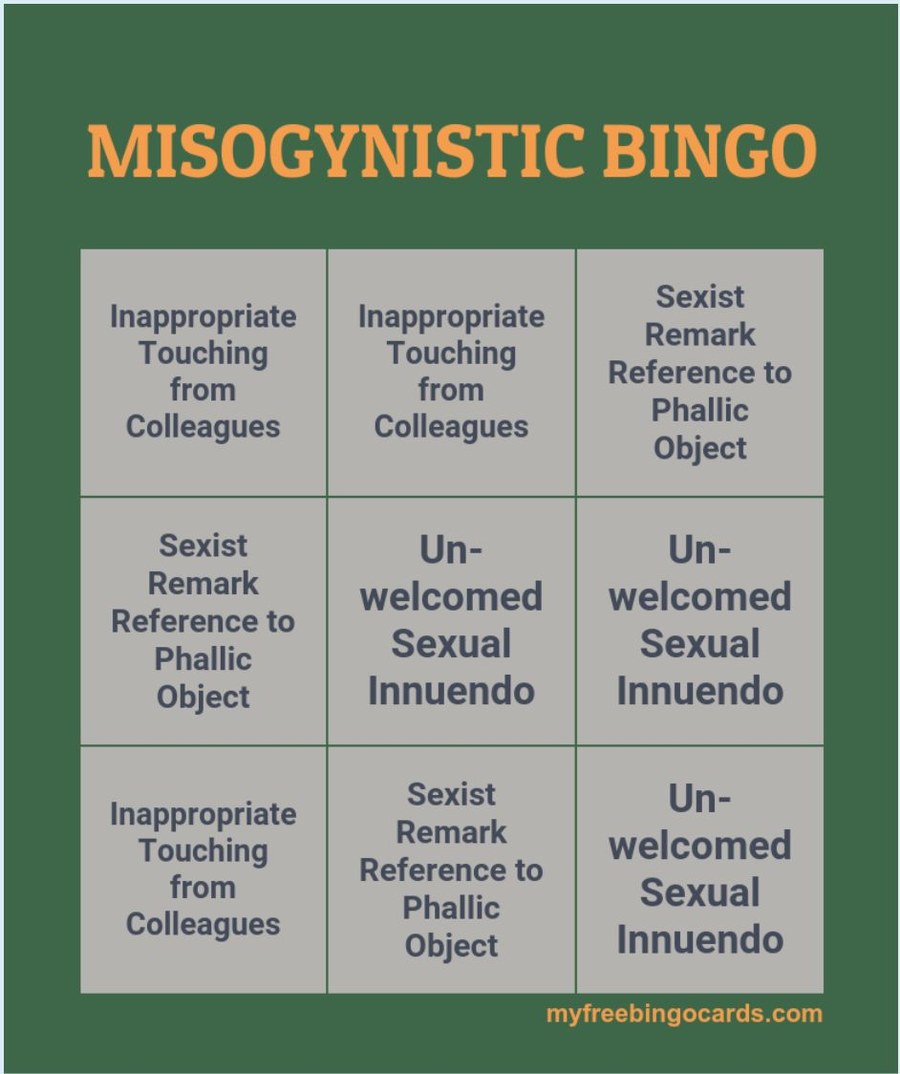
The activation is the part I would show first. It was called Misogynistic Bingo, it cost nothing, and it ran on the audience's own phones through a free bingo card generator. Every square was a behavior from the film: inappropriate touching from colleagues, a sexist remark referencing a phallic object, unwelcome sexual innuendo. People played it during the screening, marking squares as the pilot earned them.
That solved the room problem in a way no piece of print could. It gave people something to do with the discomfort, so they watched actively instead of politely. And because the whole room had spent the screening ticking off the same behaviors, the panel opened with an audience that had already built a shared list. The card worked as the agenda. Nobody had to warm the room up or explain what counted, because the audience had just spent forty minutes deciding that for themselves.
A signed book from one of the film's actors went to the winner.
Learning
The best idea in this project was the one with no budget attached.
A poster can sell a ticket. It cannot make a room pay attention, and attention was the actual goal, because the film existed to start the conversation the panel was there to have. The bingo card cost nothing and did the thing the rest of the campaign was only setting up.
The other thing worth keeping is that the fix nobody asks for is often the one holding everything else back. Nobody briefed me on the six account names, and it was not the interesting part of the job. But a campaign that sends people looking for an organization they cannot find is losing at the last step, and no amount of poster design fixes that.
Credits
Mirror/Mirror was created by Jennifer Betit Yen and produced by the Film Lab. The screening was part of the 2019 International Human Rights Art Festival at the Wild Project, 195 East 3rd Street, New York.