Elite Flavour Collection
A six-bottle travel retail pack for an ultra-premium vodka, built to be bought as a gift in an airport. Best Global Travel Retail Packaging, Frontier Awards 2017.
- Company
- Royal Dragon Vodka
- Year
- 2017
- Role
- Associate Creative Director
- Category
- Packaging / Product Design
- Adobe Illustrator
- Adobe Photoshop
Context
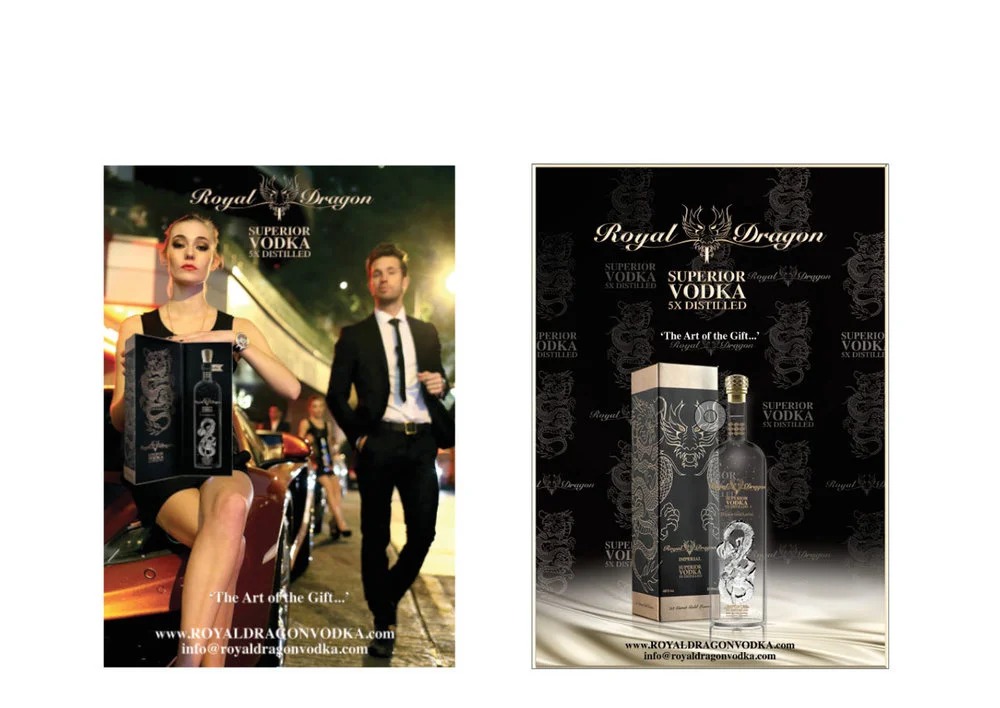
Royal Dragon is an ultra-premium vodka built around nightlife: hand-blown bottles, a sculpted dragon running the length of the glass, and an Imperial expression with 23-carat gold leaf suspended inside it. The house line is that you eat and drink with your eyes as well as your mouth, and the product design is where that gets settled.
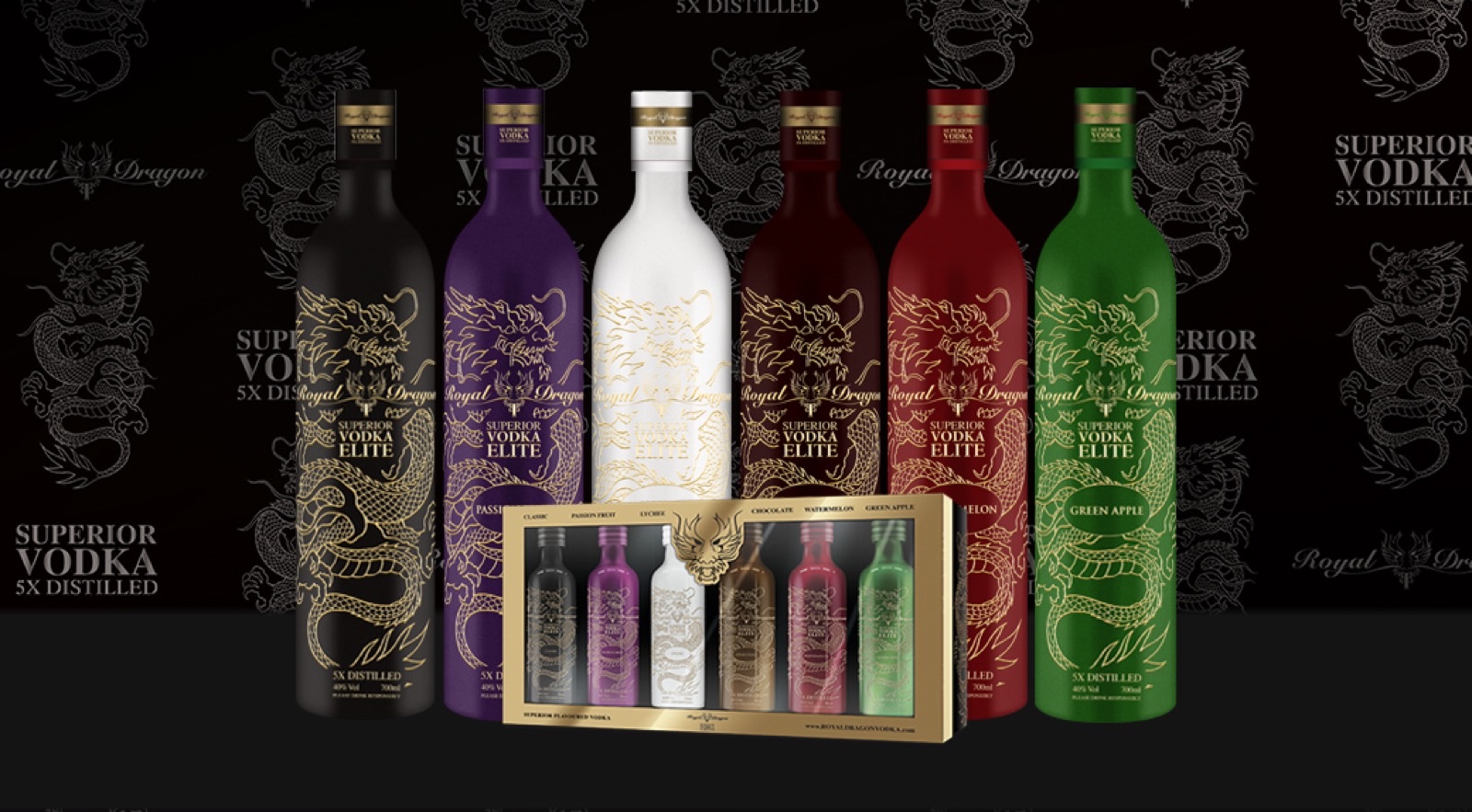
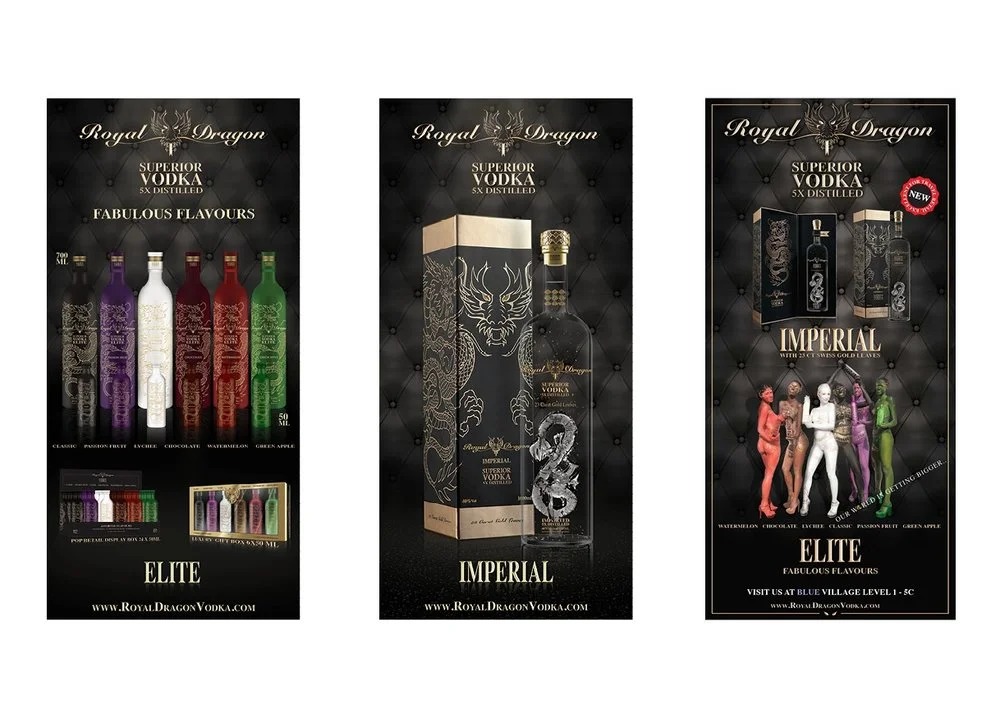
The Elite range ran six flavors in 700ml bottles, each one a different color: Classic in black, Passion Fruit in purple, Lychee in white, Chocolate in brown, Watermelon in red, Green Apple in green.
The brand was already selling itself on gifting. The campaign line was The Art of the Gift, which is a promise the packaging then has to keep.
I was Associate Creative Director, working across the brand's campaigns, product production, promotional merchandise, and exhibition design. This one is about the travel retail pack.
Problem
Duty free is a different shop from any other, and the 700ml bottle was built for the wrong one.
Someone buying in an airport is usually not restocking their own bar. They are buying a present, often for someone whose taste they do not know exactly, in a terminal, with a flight to catch and a bag they still have to carry. A single large bottle is wrong on every count. It is heavy, it commits them to one flavor, and it asks them to make precisely the choice they are least equipped to make.
The range made that worse. Six flavors is a good thing on a back bar and a problem in a terminal, because each extra option is another chance to pick wrong for somebody else. Faced with six colors and a boarding time, the safe move is to buy nothing at all.
There was a brand risk on top of it. The obvious answer is a miniature, and miniatures read as cheap. They are what comes free with a minibar or off an airline cart. A brand whose whole argument is glamour cannot fix a format problem by shipping the format people associate with throwaway.
Solution
The pack gives the shopper all six flavors instead of asking them to choose one, in 50ml bottles, as a single object.
That turns the range from a problem into the reason to buy. The question stops being which flavor and becomes whether to buy the thing at all, which is something a person can settle in an airport in under a minute. It also takes away the risk of guessing wrong about somebody else's taste, which is the real worry in a gift.
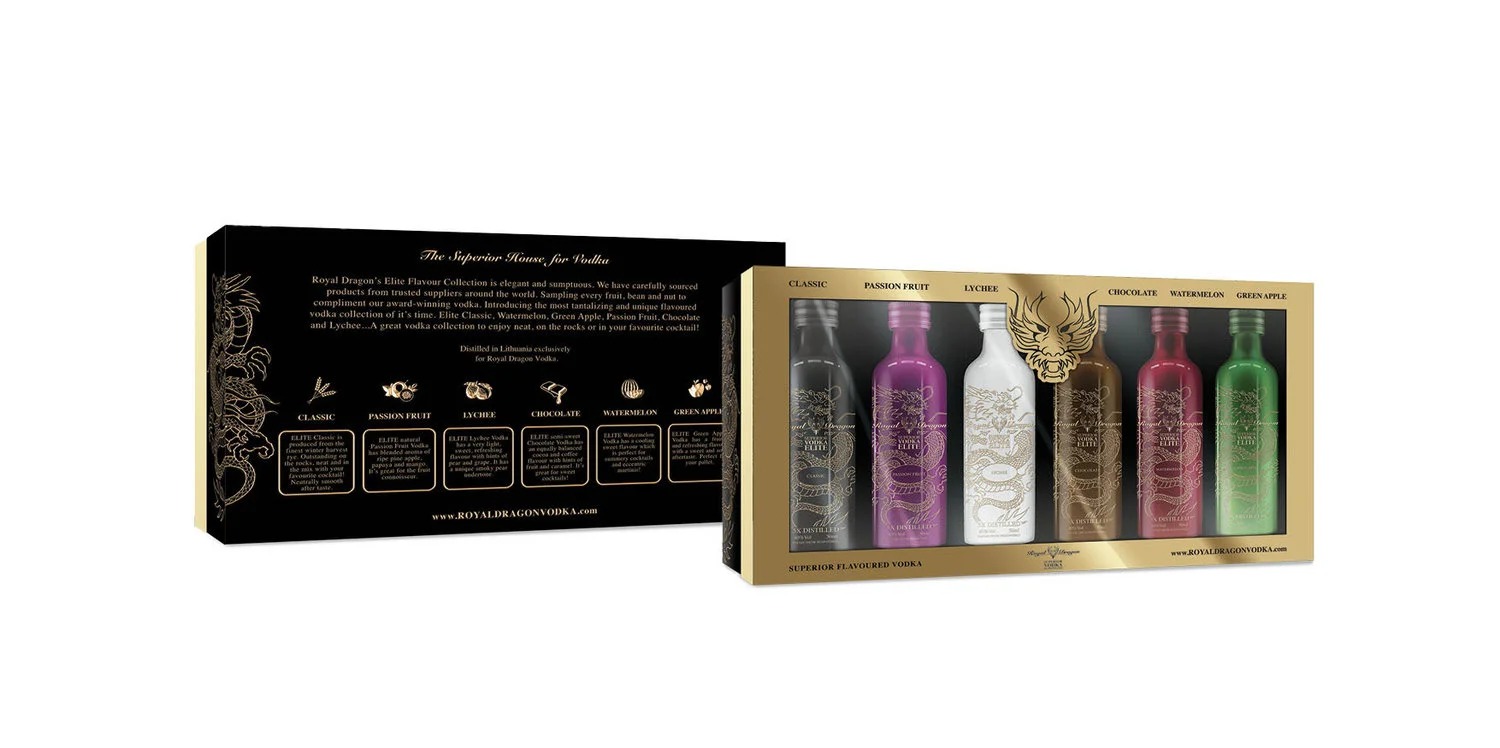
What keeps it from reading as a set of miniatures is the presentation. It is laid out like a box of chocolates: a flat gold tray, six bottles in a row behind a window, each flavor named in small caps along the top edge, the dragon crest centered above them. Nobody thinks of a box of chocolates as cheap, and everybody already knows it is a gift. Borrowing that format meant the pack turned up with the right associations attached instead of having to earn them.
The back of the box does the job a shop assistant would do if there were one. Nobody in a terminal is going to explain six flavors to you. So the back panel carries a tasting note for each, with its own icon. What the Lychee is like against the Chocolate, which ones work neat, which are built for a cocktail. It is the only part of the pack that has to be read rather than looked at, and it is there because the buyer is frequently not the drinker and wants to know what they are handing over.
The bottles keep the full design of the 700ml range at a fraction of the size. Same dragon relief down the glass, same flavor color, same gold. Nothing was simplified to suit the smaller format, and that is what separates it from a miniature, because a miniature is usually where the design gets dropped.
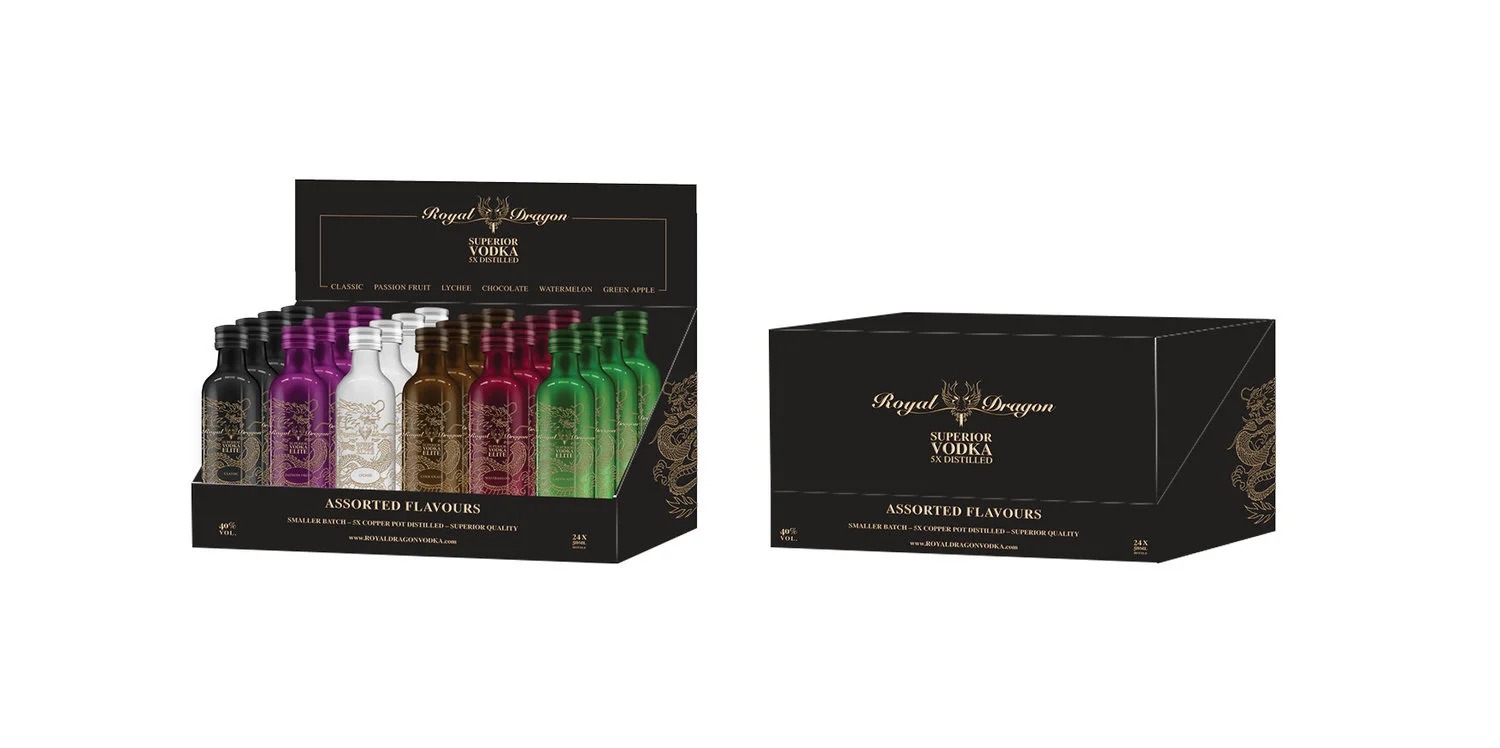
There is a second pack behind the first one, and it solves the retailer's problem rather than the shopper's. Duty free shelf is scarce and staff time is scarcer, so the 24 x 50ml case ships closed and opens into a counter display, with the lid lifting to become the header card and the bottles standing ready to sell. Nothing gets unpacked or arranged. That pack is what puts single bottles next to a till as an impulse buy, while the six-bottle box does the considered gift purchase further back in the store.
Impact
The pack won two Frontier Awards at the TFWA World Exhibition in Cannes in 2017: Best Global Travel Retail Packaging, and Star Product of the Year under US$100.
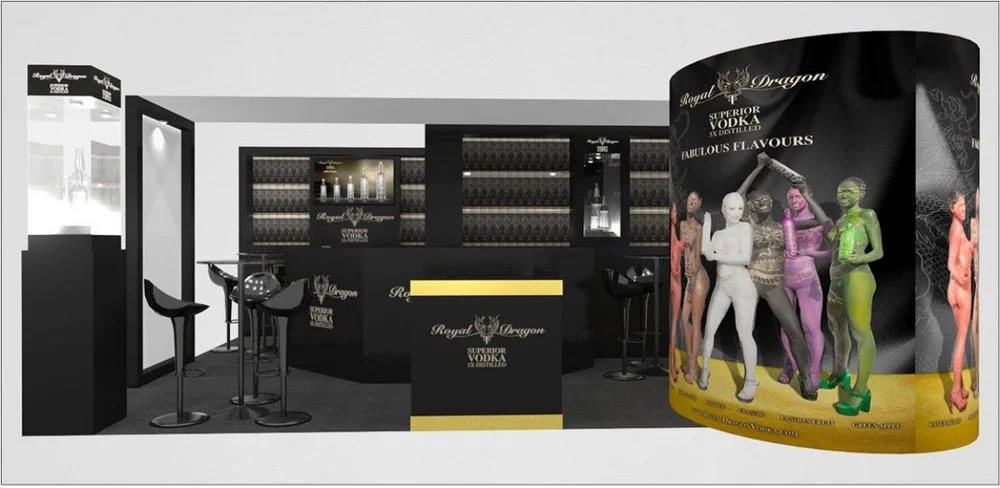
Cannes is also where the brand had to show it. The stand was built as a tasting bar rather than a display case, with backlit shelving carrying the range and a curved wall running the flavor campaign, at Blue Village Level 1.
The brand had been in travel retail for under two years at that point, which is the part worth noting. Duty free is a channel with long-established incumbents and limited shelf, and the packaging is what earned the position rather than a marketing budget.
Learning
The design problem was never the bottle. It was the decision someone had to make standing in front of it.
Six flavors looks like a merchandising strength until you put it in a terminal, where it turns into six chances to choose badly. Bundling the whole range added nothing to the product. It removed the question, and removing the question is what made it sell.
Borrowing a format also beat inventing one. A box of chocolates already carries everything this pack needed people to assume: that it is a gift, that it is meant to be shared, that the variety is the point rather than a sign of indecision, and that it is not cheap. Designing a new presentation from scratch would have meant teaching all of that to someone walking past with a flight to catch.
The thing I would carry forward is that the pack had two customers, not one. The shopper had to want it and the retailer had to be able to put it out in thirty seconds without being asked twice. Getting the second one wrong is how good packaging ends up in a stockroom.
Credits
Royal Dragon Vodka was founded by Michel Morren and co-founded by Ralph Pelzer. The Frontier Awards are presented at the TFWA World Exhibition in Cannes.